
The way you buy print is changing
By Nicky Tangi
For years, print has been seen as a standalone purchase by procurement teams, marketers and operations managers, and indeed, the sales teams that sell it. But customers have never experienced it that way. They experience brands, which is why it’s time to stop thinking about print separately to your overall brand delivery.
Clients’ needs have changed and I’ve changed my approach to suit because it’s clear, the brands that consistently deliver exceptional customer experiences and results are the ones that aren’t simply buying print – they’re investing in brand delivery. It’s an important difference.
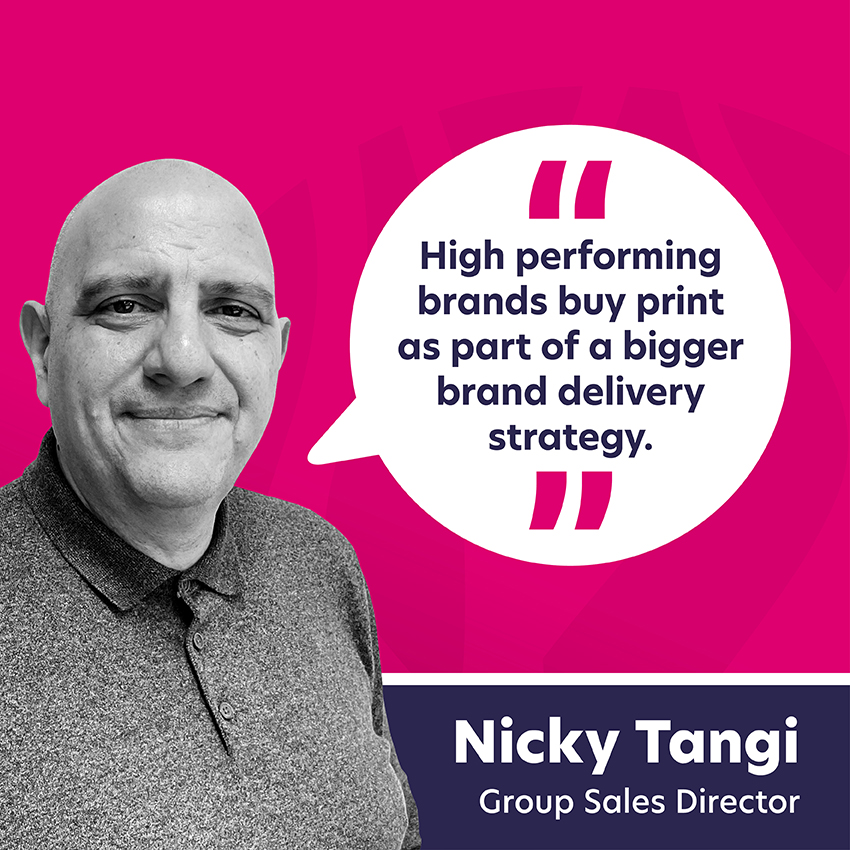
The problem with just buying print
I firmly believe just focusing on one production element can mean the bigger picture is missed. Here’s an example, you’re rolling out a national retail campaign across 150 locations, the print quality is spot-on BUT 30 stores don’t get their delivery in time, 15 stores don’t display them correctly and another 10 don’t get the complete set of assets. Print isn’t the problem here; it’s the delivery of the whole brand experience.
Customers don’t think like we do – they don’t think print, logistics, design. They simply experience brands, which is why Pollards are completely committed to delivering brand experiences, more that brand materials. Gone are the days where I just talk about a print finish, the more important conversation is around the whole brand journey. Understanding what’s going on around it, when and where.
Brand delivery gets results
I always say print delivers materials, brand delivery delivers results. Campaigns don’t work because the objective was to print a brochure, more that they needed to engage customers, create a memorable experience or drive sales.
Print is an important part of this process, and absolutely where my heart is and where much of my career has led me, but anyone working in print sales today needs to be able to offer the end-to-end brand delivery experience. Clients crave simplicity, control and quality and these needs shape the Pollards brand delivery proposition – seamless and consistent brand delivery at every touchpoint:
Individually, each service delivers value. Together they deliver consistency, control and impact. When working through a new brief with a client, I always ask about everything else that’s going on around and the advantages of planning it as a whole rather than piecing it together like a jigsaw. I don’t want to be a part of puzzle; I want to solve it.
The value equation
The old approach of shopping around for the best deals doesn’t really stack up in today’s world and actually creates costs in other ways. You won’t see the hidden and unexpected costs linked to late deliveries, emergency reprints, fulfilment issues, not mentioning the time it all takes for a client to manage and co-ordinate, appearing on a print quote!
The real question should be, “How can we ensure this campaign succeeds,” rather than, “Who can print this the cheapest?”
It’s about being partners not suppliers
Brands today operate across multiple channels, locations and customer touchpoints – digitally and physically, often with ambitious timelines. It can feel complex unless you’re working in partnership with a brand delivery company – like Pollards. Speak with any of the Pollards team and they’ll help you shape solutions, spot potential risks, suggest new opportunities, find efficiencies in delivery and most importantly, take accountability.
For clients, I love nothing more than hearing them say how they feel they have more time to focus on their brand strategy and business planning, valuable thinking time to drive creativity and growth. Achieving brand consistency at scale can be a huge challenge unless you are working in partnership with a brand delivery business under one coordinated approach.
Think big!
Print remains a powerful and important part of the marketing mix, but the brands seeing the greatest success aren’t buying print. They’re investing in how their brand is delivered, thinking bigger, beyond the printed asset into the whole brand experience.
Let’s be honest, customers won’t remember how the campaign was produced but they will remember how it made them feel.